
Is There a Way to Make EV Charging Convenient for Condo Residents?
Resound Energy Services™, the Pacific Northwest’s leading EV charging contractor, understands the dilemma for condo owners and HOAs.
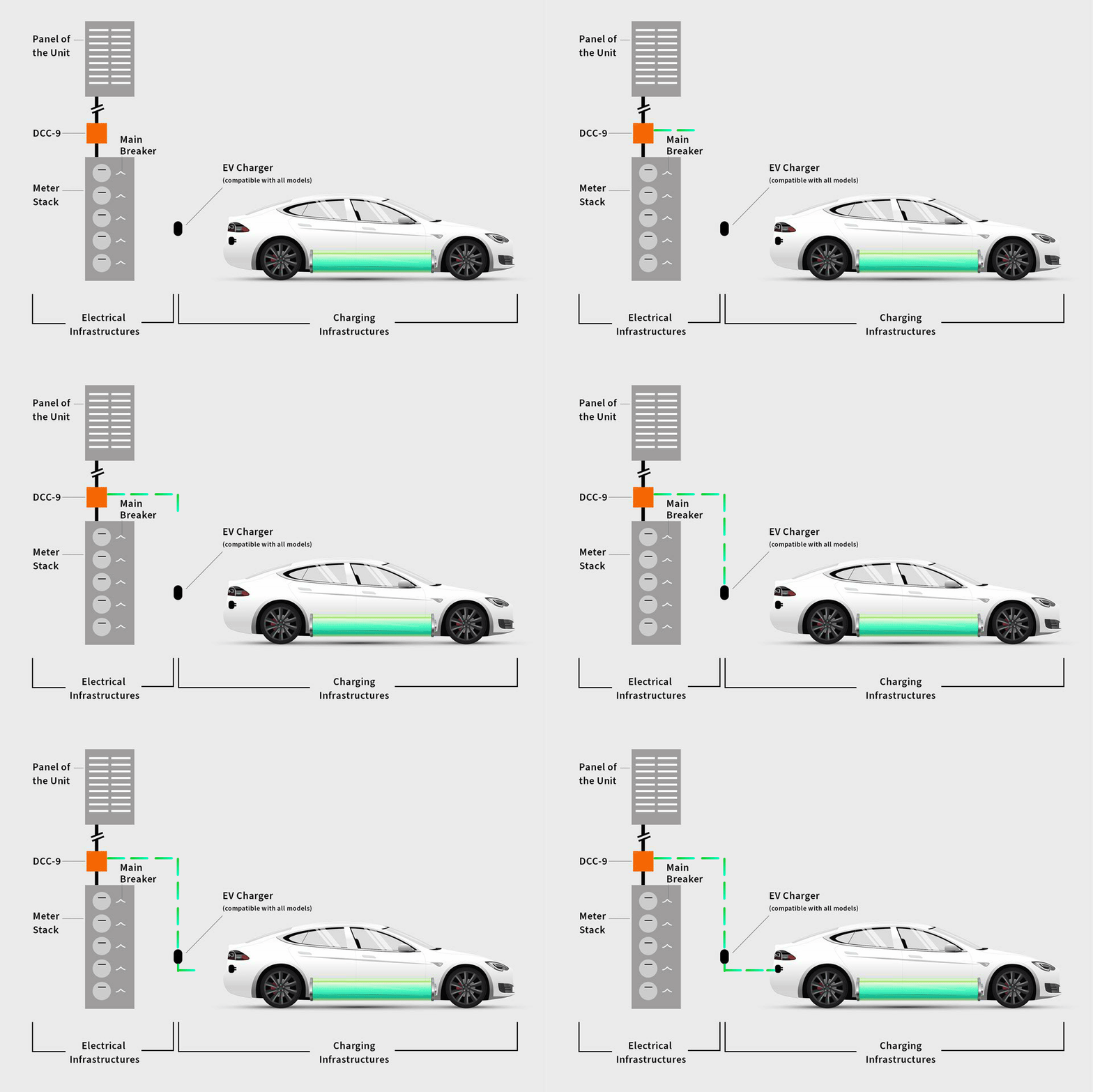
That’s why we utilize Dynamic Demand Control technology to enable condo owners to connect to their individual unit’s electrical panel, even if the car is parked in the communal garage. As a result, condo owners can enjoy fast Level 2 EV charging without utilizing the building’s common area power. In addition, HOAs will not need to be reimbursed for consumption as the usage costs will be added to the owner’s existing utility bill.
EV Charging Challenges in Condominium Buildings
Condos face similar challenges to an apartment EV charging station. The main electrical panel often lacks spare power for multiple chargers. Upgrading this infrastructure is very expensive. Also, installing individual chargers for many residents requires complex wiring through common areas, which doesn’t begin to address managing peak energy demand without overloading the building’s system.
Limited Electrical Capacity in Condominium Parking Garages
A condo’s parking garage has a fixed electrical capacity, like a single wall outlet for many devices. The existing power is designed for lights and garage doors, not multiple car chargers. Each charger needs a large, dedicated circuit. Adding several can overload the main building transformer and electrical panels. This makes a simple hardware upgrade very difficult and costly without a smart management solution.
HOA Restrictions and Shared Power Usage Issues
Homeowners Associations (HOAs) often have strict rules that often limit charger installations. Furthermore, power in a building is a shared resource. If many residents charge cars at the same time, they create a huge combined power demand. This shared usage can exceed the building’s total capacity, tripping breakers or causing outages. Fairly allocating costs for this shared electricity is another common technical challenge.
The Capacity Problem Solved With Demand Control EV Charging
Most American buildings were built before the start of the EV revolution, and they weren’t designed with the capacity to accommodate individual unit electrical usage from the common electric panel.
For the vast majority of a condominium’s, available electrical capacity is distributed amongst panels of individual units. Those panels are typically tied to the utility meter located in a parking garage electrical room.
Resound Energy Services™ Dynamic Demand EV management systems are installed near the meter banks, providing convenient access to each unit’s electrical line. The Dynamic Demand control unit connects to the homeowner’s panel at the meter stack in the garage.
So, how does Resound Energy Services™ get around capacity limits without upgrading a building’s entire electrical infrastructure? Dynamic Demand Control measures, in real-time, the condo’s available capacity in the homeowner’s panel. The available power is then sent to the charging station. If ever the panel is using 80% or more of its available capacity, the controller prioritizes the unit and stops charging the vehicle until a safe amount of capacity becomes available.
How Demand Control Enables EV Charging Without Electrical Upgrades in Condominiums
Demand control technology acts as a smart manager for available power. It constantly monitors the unit’s total electrical usage. When other systems or appliances use more power, it temporarily slows down or pauses the charger. This ensures the total load never exceeds the building’s safe capacity. This intelligent sharing allows multiple chargers to operate and is crucial for EV charging solutions for condominiums without needing a costly and disruptive electrical panel or service upgrade.
Real-Time Load Management for Individual Condo Units
This system provides real-time load management for each resident’s charger. A central software monitors all chargers and the building’s main power meter instantly. If total demand nears the limit, the software automatically adjusts charging speeds. It can lower power to some units while others charge faster, ensuring fair access. This dynamic balance protects the electrical system and avoids overloads for every condo unit.
Level 2 EV Charging for Condominium Parking Garages
A Level 2 EV charging for condominium parking garages uses a 240-volt circuit, similar to a home dryer or oven. It is the preferred solution for condos because it charges a car much faster than a standard wall outlet. In a shared garage, these chargers are professionally installed on dedicated circuits. When combined with a demand control system, many Level 2 stations can operate together safely without overloading the building’s existing electrical capacity.
How Individual-Panel EV Charging Works in Shared Garages
This method connects a charger directly to an individual condo owner’s electrical panel, not the shared building system. A dedicated circuit is wired from the owner’s meter, through the building, to their parking space. The resident pays for the electricity on their own utility bill. This avoids shared cost debates but requires available capacity in the owner’s panel and significant wiring through common property, which needs HOA approval.
The Billing Problem Solved for HOAs and Condo Associations
Common area power usage must be reimbursed, typically without making a profit, to the HOA. This presents a unique challenge for condominiums when trying to understand how they can provide charging amenities to individual owners.
With Dynamic Demand Control‘s individual-panel topology, individual owners’ consumption will be billed directly to their existing utility bill, eliminating the need for the HOA to be involved in billing or reimbursement for electrical consumption by EV chargers.
EV Charging Solutions for HOAs and Condo Associations
EV charging solutions for HOAs and condo associations are possible through modern solutions. A shared, centrally-managed system with smart charging stations is often best. Demand control software dynamically allocates power to prevent overloads. This allows EV charging without electrical upgrades in condominiums. Such systems can also track individual usage for accurate billing, solving the shared power cost issue for the association.
Who Pays for EV Charging Installation in Condominiums?
Payment models vary. For a shared system, the condo association typically pays for the main infrastructure and software. Residents may pay a fee to access it. For an individual-panel setup, the homeowner pays for their own charger and installation wiring. Sometimes, grants or utility rebates help offset costs. The chosen technical solution directly determines who is responsible for the installation and ongoing electricity payments.
Benefits of EV Charging Solutions for Condominium Buildings
The addition of EV charging stations increases the value of properties and units and makes a building more desirable to live in.
In the not-too-distant future, it’s easy to imagine that EV Charging at Condos and all residences will be a requirement (it’s already happening in some areas). But even before that, condo owners will come to expect EV charging in the same way they expect laundry facilities.
How EV Charging Increases Condo Property Value and Marketability
Inclusion of EV charging makes condo buildings more attractive and valuable. It is a helpful feature that new buyers and renters really want. It shows the building is ready for the future. This makes the property worth more money and easier to sell. It helps the building stand out from others that do not have charging. It is a smart upgrade for everyone.
EV Charger Installation Rebates for Condominium Buildings
As the government takes measures to combat climate change and incentivize green behavior among consumers, lucrative tax rebates are popping up everywhere. These vary depending on state, city, and if a parking stall is shared vs. deeded. If you are interested in understanding what you’d qualify for, reach out to Resound Energy and a dedicated rebate specialist will provide specific rebate programs for your project.
At Resound Energy Services™, we leverage combined decades of experience with a passion for change to help existing and prospective property owners upgrade their facilities and site plans to meet the consumption needs of the future. We’re proud to help facilities and stakeholders take advantage of EV charger installation rebates, plan accessible charging layouts, and comply with state and federal regulations throughout. Because we’re familiar with local utility programs nationwide, we are well-positioned to help you procure the highest possible incentives.
Federal, State, and Utility Incentives for Condo EV Charging
There is good financial help available for condo EV charging. The federal government offers tax credits. Many states and cities provide extra cash grants or rebates. Local utility companies also give money back for buying approved equipment or for installation work. These incentives are made to lower the high upfront cost. They make installing a shared or smart charging system much more affordable for an association.
How to Find a Reliable EV Charger Installation Company for Condos
Much like in the solar industry, EV charger installers are popping up everywhere. However, there are no EV charging contractors that surpass our expertise. Energy efficiency is our passion, and our mission is to create an exquisite experience for each client and condo owner.
Unlike many of the newer companies, we have a thorough process for assessing and implementing EV charging assets, regardless of how the property’s electrical infrastructure is structured. Each project manager has the expertise to maximize your rebates and overall cost savings for when you install EV charging at condos or retrofit LED lighting for safer common areas and improved efficiency.
EV Charger Installation for Condominium Buildings: Our Process
Our process makes the installation process for condominium EV charging smooth. First, we check your building’s electrical capacity and parking layout. Next, we design a custom plan for the chargers and smart software. We handle all permits and HOA approvals. Our experts then complete the professional wiring and station setup. Finally, we test the system and show your team how to manage it. We guide you from start to finish.
About Resound Energy Services’ EV Charging Solutions
Proudly headquartered in Seattle, WA, Resound Energy Services™ also serves Spokane, WA, Portland, OR, Phoenix, AZ, San Francisco, CA, and Denver, CO
We are licensed, bonded, and insured. We offer energy-saving lighting and EV charger installations and maintenance for commercial offices, warehouses, industrial buildings, retail establishments, shopping centers, as well as multifamily units.
The Future of EV Charging in Condominiums and Multifamily Housing
With climate change and increasing gas prices top of mind for many Americans, it’s no surprise that the automotive industry is taking note and going green. A single gas-powered vehicle can release as much as three times its weight in greenhouse gasses over its lifetime, but in 2019, only about 1.8 percent of the cars on the road were electric. By 2025, experts predict that that number will jump to 10 percent. Nearly every automotive manufacturer is working toward offering plug-in cars – many already do. Some have even announced that they’ll soon only sell hybrid and battery-powered electric vehicles. So it’s easy to see that in the near future, EV growth will become exponential. Are we ready for that day?
Saving gasoline and the climate aren’t the only benefits of electric vehicles (EVs). They’re easier and cheaper to maintain, they are much quieter than their internal combustion engine grandparents, and in some states, you can sail past traffic in EV and HOV-dedicated lanes. Combined with the fact that you receive a hefty tax credit upon purchase of an electric vehicle, it’s easy to see why going electric is more than just a trend.
EV charger installation is already becoming a must-have for property buyers. A home in an EV-friendly neighborhood sells for about 1.5 times the amount of a comparable home in a nearby less EV-friendly neighborhood. Furthermore, those EV-friendly neighborhoods have property values that are 2.6 times higher than the rest of the country.
Are There Enough EV Charging Stations for Condo Residents?
Depending on where you live, you may find that a few gas stations have charging ports (if they even work), and some retail shopping centers offer charging stations. For single-family homes, a Level 1 EV charger from an ordinary 120 volt home outlet can take as long as 42 hours to take a battery from empty to full. Fortunately, Level 2 EV chargers are more than twice as powerful as Level 1 chargers and can deliver up to 60 miles of drive time per hour of charge time.
However, getting 240V power for a level 2 charger can be a challenge for those who live in condominiums. HOAs could install common use level 2 chargers in some garages (if there are stalls available), but we all know the challenges of getting an HOA to specially assess a cost that won’t be used by all residents. And what about HOA restrictions on power usage, reimbursement for power consumption, and equitable constraints?
What This Means for Condo Owners, HOAs, and Property Managers
Offering electric vehicle charging isn’t just a way to distinguish your property or satisfy green-minded homeowners. Very soon, it may be obligatory. Electric vehicles aren’t just an optimistic dream for the future; they’re our solution for maintaining the American automotive lifestyle. Electric vehicles may seem few and far between on the roads now, but that’s changing right before our eyes. To combat gaps in charging service availability, some cities are making strides to require EV-compatible amenities in multifamily residential properties and similar settings.
Charging availability shouldn’t be a barrier to a greener lifestyle – or more lucrative business practices. Get in touch with an EV charging expert today to change how you stay topped off. Make a statement. Talk to one of our EV experts to find out how your multifamily complex can transition from part of the problem to part of the solution.
Power your business with reliable EV charging and energy-efficient lighting—
partner with Resound Energy today.
FAQs About EV Charging Solutions for Condominiums
Can EV chargers be installed in condominiums without upgrading electrical infrastructure?
Yes, EV charging solutions for condominiums are possible using smart demand control technology. This system manages the power used by chargers in real time. It prevents overloads by sharing the existing electrical capacity safely among all users.
How does demand control EV charging work in condo buildings?
A central computer monitors the building’s total power use. If other appliances use more electricity, it temporarily slows down some chargers. This smart sharing keeps the building’s power system safe and avoids costly upgrades.
Who pays the electricity cost for EV charging in condominiums?
It depends on the system. For a shared setup, costs are split or billed to each user. If connected to a private meter, the individual homeowner pays directly on their own utility bill.
Can HOAs allow individual EV chargers in shared parking garages?
Yes, but rules vary. HOAs often allow them if installation is safe, follows electrical codes, and is paid for by the homeowner. Approval is usually needed for wiring through common areas when it comes to EV charging solutions for condo residents.
Is Level 2 EV charging possible in older condominium buildings?
Yes, it’s possible to have a Level 2 EV charger installation for condominium buildings. A professional must check the electrical capacity first. Pairing Level 2 chargers with a demand control system makes this work safely without a full panel upgrade.
What incentives or rebates are available for condo EV charger installation in the US?
Federal tax credits, state grants, and utility company rebates are often available. These programs help pay for the chargers and installation, making the project much more affordable for associations.
How long does EV charger installation take in a condominium building?
The timeline varies by project size. A typical installation for a few stations, including planning and permits, usually takes between two to four months from the start to completion.