
Charging is the part of EV ownership that feels confusing at first. You see Level 1, Level 2 and Level 3 on apps and public signs, then you wonder which one you actually need. In this guide, we’ll answer the common question: how does level 1 2 3 EV charging work. You will learn how power reaches the battery, how speed changes by level and where each option fits in real life.
What Are EV Charging Levels 1, 2, and 3?
Charging levels are categorized based on power delivery. Level 1 uses a 120 volt outlet. Level 2 uses a dedicated 208 to 240 volt circuit. Level 3 uses direct current for fast charging.
Many new drivers ask “what is level 1, 2, 3 charging?” because the names sound technical. A simple shortcut is time. Level 1 is slow, Level 2 is daily-friendly, Level 3 is road-trip speed.
You will also see EV charging level 1 2 3 in listings. They mean the same three levels.
Understanding the Basics of EV Charging
EV batteries store energy as direct current. Buildings supply alternating current. Charging equipment manages that mismatch, plus heat, voltage and safety limits. When you ask how does level 1 2 3 EV charging work, it really comes down to how power is delivered and converted at each level.
Charging speed depends on charger power, what your vehicle can accept, battery temperature, battery state of charge and site electrical capacity. As demand grows, many networks use data driven monitoring and automated alerts. They also use predictive maintenance to keep chargers reliable.
How EV Chargers Deliver Power to an Electric Vehicle
Before charging starts, the charger and the vehicle “talk” to each other. They check the safety lock. They also agree on how much current to use. With AC charging the station sends AC power and car converts it to DC. With DC fast charging, the station sends DC straight to the battery.
Level 1 EV Charging: How It Works
Level 1 is a simple method. It’s easy to use but it’s the slowest. It works best when your car is parked for long hours for most days.
What Is Level 1 EV Charging?
If you wonder what is a level 1 charging station, it’s the basic setup. It uses a standard 120 volt outlet and a portable charging cable. Plug in at home. Let the battery recharge while you sleep or work.
Level 1 Charging Speed, Power Output, and Voltage
Various level 1 charging is about 1.2 kW to 1.9 kW. Many EVs gain roughly 3 to 5 miles of range per hour. Larger batteries can take 24 hours or more than that.
Level 1 Charging Cost and Installation Requirements
Level 1 often needs no new hardware beyond the cable. Still, have an electrician check an older or shared outlet. A dedicated circuit can reduce heat.
Ideal Use Cases for Level 1 EV Charging
Choose Level 1 if you drive short distances and park overnight. It’s also a backup on trips when only a standard outlet is available.
Level 2 EV Charging: How It Works
Level 2 still uses AC charging. But the difference? It delivers more power. That’s why it’s the go to option for daily charge at home and at work.
What Is Level 2 EV Charging?
Level 2 runs on a dedicated 208 to 240 volt circuit. It uses a wall-mounted or pedestal charger. The station sends AC power to your EV. Then your vehicle converts it to DC to charge the battery. If you are wondering what is a level 2 EV charging station, it’s this higher voltage setup built for faster everyday charging.
Level 2 Charging Speed, Power Output, and Voltage
Many home units deliver 6.2 kW to 11.5 kW. That can add 20 to 40 miles of range per hour, depending on the vehicle. Homes are often 240 volts. Many commercial sites are 208 volts.
Level 2 Charging Cost and Installation Requirements
Cost includes the charger and electrical work. Pricing depends on panel capacity, wire run length, permits and upgrades. Smart units can feel AI powered with scheduling, energy reporting and load sharing.
Ideal Use Cases for Level 2 EV Charging
Level 2 fits homes, apartments, workplaces and public parking where cars stay parked for hours. If you want a full battery most mornings, Level 2 usually delivers that routine.
Level 3 EV Charging (DC Fast Charging): How It Works
Level 3 is made for speed and high turnover. They’re common at highways, fleets and busy retail corridors.
What Is Level 3 EV Charging?
Level 3 charging converts grid power into DC inside the station, then sends DC to the vehicle battery system. Since the station does the conversion, equipment is larger and site design is stricter.
Level 3 Charging Speed, Power Output, and DC Technology
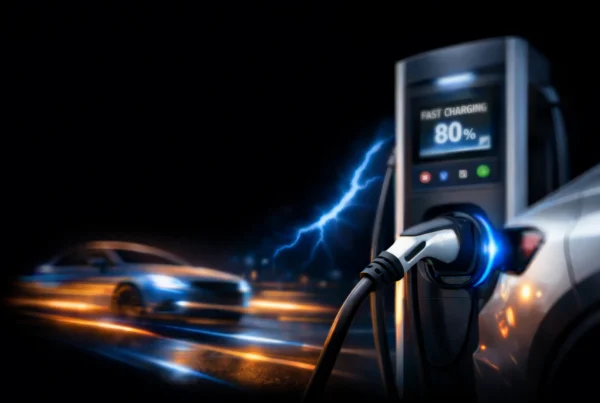
Stations can be found from 50 kW to 350 kW. Many EVs can reach about 80% in 20 to 40 minutes, then charging slows as the battery fills. Battery management system limits the power to control heat.
Level 3 Charging Cost and Infrastructure Requirements
Level 3 projects often need utility coordination. They may also need trenching. Switchgear is common, and protection systems are usually required too. That is why planning level 3 EV charging stations for retail sites needs careful electrical design and clear timelines.
Ideal Use Cases for Level 3 EV Charging
Level 3 is best when drivers need fast energy to drive, when fleets need quick dispatch or when your site depends on short dwell time.
EV charging level 1 2 3 cover fast daily charge and quick trip refuel.
Level 1 vs Level 2 vs Level 3 EV Charging Stations: Key Differences
The difference between level 1 level 2 and level 3 EV chargers are charging speed, total cost and installation.
Comparison Table: EV Charging Level 1, 2, and 3
| Level | Power type | Typical power | Typical session |
| 1 | AC | 1.2–1.9 kW | 12–36 hours |
| 2 | AC | 6.2–19.2 kW | 4–8 hours |
| 3 | DC | 50–350 kW | 20–40 min to ~80% |
Charging Speed and Range Comparison
Level 1 adds a few miles per hour. Level 2 adds tens of miles per hour. Level 3 is rapid early in the session, then tapers near higher charge.
Cost Comparison: Level 1 vs Level 2 vs Level 3 EV Charging
Level 1 is the lowest cost. Level 2 adds equipment and installation. Level 3 is the highest cost due to high-power hardware and utility work. Match your spending to dwell time.
Installation Complexity and Power Requirements
Level 1 needs a safe outlet. Level 2 needs a dedicated circuit and load calculation. Level 3 needs three-phase service and utility approvals, plus careful site engineering.
Use Case Comparison: Home, Workplace, and Public Charging
Home and workplace settings usually favor Level 2. Public sites split by dwell time. If you are comparing level 1, level 2 vs level 3 EV charging stations for one address, record average parking time first. Hotels and garages fit Level 2. Highway corridors often need Level 3.
Level 1, Level 2 vs Level 3 EV Charging Stations: Which Should You Choose?
This choice is mostly about parking time. Overnight parking can support Level 1 or Level 2. Several hours favors Level 2. Less than an hour often needs Level 3. That is why they are a practical decision, not a guessing game.
Choosing the Right EV Charging Level for Home Use
Most people go with Level 2 so they wake up to a ready battery each day. Level 1 can still do the job if you don’t drive much. If you might add a second EV later, it’s smart to plan for the extra capacity now.
Choosing the Right EV Charging Level for Commercial and Public Locations
Commercial planning should be structured and data-driven. Start with dwell time, then electrical service and parking flow. For design and installation support, partner with experienced EV charging contractors.
Are EV Chargers Interchangeable Across Levels?
Some are, some are not. The key divider is AC versus DC.
Compatibility Between Level 1 and Level 2 Chargers
Level 1 and Level 2 use AC and depend on the onboard charger. Most EVs can use the same inlet for both, so switching is simple when the connector matches.
Why Level 3 Chargers Are Different (DC vs AC Charging)
Level 3 sends DC directly into the battery system through high voltage pathways. The connector and communication differ, so Level 3 is not interchangeable with Level 1 or Level 2 in the same way.
Understanding EV Charging Modes: Mode 1, Mode 2, Mode 3, and Mode 4
Modes describe control and safety, not speed. Mode 2 is common for portable cables. Mode 3 is common for dedicated AC stations. Mode 4 is used for DC fast charging. Mode 1 is rare for modern EVs.
Difference Between EV Charging Levels and Charging Modes
Levels describe power capacity. Modes describe how the session is controlled and protected. You can have Level 1 with Mode 2, Level 2 with Mode 3 and Level 3 with Mode 4.
Level vs Mode Explained with Simple Examples
Portable cable at a wall outlet is Level 1 with Mode 2. Wall-mounted home charger is Level 2 with Mode 3. Highway fast charger is Level 3 with Mode 4.
Which Charges Faster: 1.0 A vs 2.4 A in EV Charging?
Under the same voltage, 2.4 A charges quicker than 1.0 A, if the circuit and vehicle support them.
How Amperage Impacts EV Charging Speed
At 240 volts, 32 amps is about 7.7 kW. At 48 amps, it is about 11.5 kW. If your vehicle can accept it, charging time can drop. If it cannot, the vehicle limits intake.
Real-World Charging Speed Comparison
In daily use, measure speed as miles of range per hour. Level 1 is a few miles. Level 2 is tens of miles. Level 3 is fastest early, then it slows near higher charge levels.
Safety, Efficiency, and Battery Impact Across EV Charging Levels
All levels 1, 2 and 3 charging use safety checks before power flows. Level 1 and Level 2 usually create less heat, so they suit daily routines. Level 3 creates more heat, so vehicles rely on cooling and strict limits.
For battery health, a balanced approach helps. Use Level 2 for daily charging and use Level 3 when speed matters.
Key Takeaways: Understanding EV Charging Levels 1, 2, and 3
Here’s a simple understanding of EV charging level 1, 2, 3. Level 1 is simple and slow. Level 2 is the daily choice for most drivers. Level 3 is the rapid option for travel and fleets. When you shop, you will see level 1 level 2 and level 3 EV chargers listed side by side.
Levels describe power, while modes describe control. If you still ask “what is level 1, 2, 3 charging” then check your parking window first. That answer usually points to the right level.
To know “how does level 1 2 3 EV charging work?” Level 1 uses a standard outlet, Level 2 uses a higher voltage circuit and Level 3 uses DC to charge fast.
FAQs About Level 1, Level 2, and Level 3 EV Charging
What is the difference between Level 1, Level 2, and Level 3 EV chargers?
Level 1 uses 120 volt AC and is slow. Level 2 uses 208 to 240 volt AC for daily use. Level 3 is the fastest but costly. That’s why people group EV charging levels 1, 2, 3 for quick comparison.
What is the primary difference between Level 1 and Level 2 EV charging?
It’s mainly voltage and power. Level 2 uses a dedicated circuit with higher voltage and current, so charging time drops. Level 1 is limited by a standard outlet.
Which charges faster, 1.0 A or 2.4 A?
With the same voltage, 2.4 A charges faster. More amps means more power, if the circuit and device support it.
What is Mode 1, Mode 2, Mode 3, and Mode 4 EV charging?
Modes describe how charging is controlled and protected. They’re different from levels. Mode 2 is common for portable cables. Mode 3 is for dedicated AC stations. Mode 4 is for DC fast charging.