

Understanding EV Charging Levels
Level 1 Charging Stations
These are just your everyday home outlet—like the one you plug your phone or lamp into. Super slow, only adds about 3–5 miles of range per hour. It works really well if you require overnight charging at home. If you’re wondering what is a level 1 charging station, this is the simplest example: no setup, no hassle—just plug in the car and go to sleep.
Level 2 Charging Stations
For people wondering what is a level 2 EV charging station — these are way quicker and pretty common—at homes, offices, parking lots, you name it. They use a 240-volt plug (like your dryer or AC) and give you 20–60 miles of range in an hour.
Level 3 Charging Stations (DC Fast Charging)
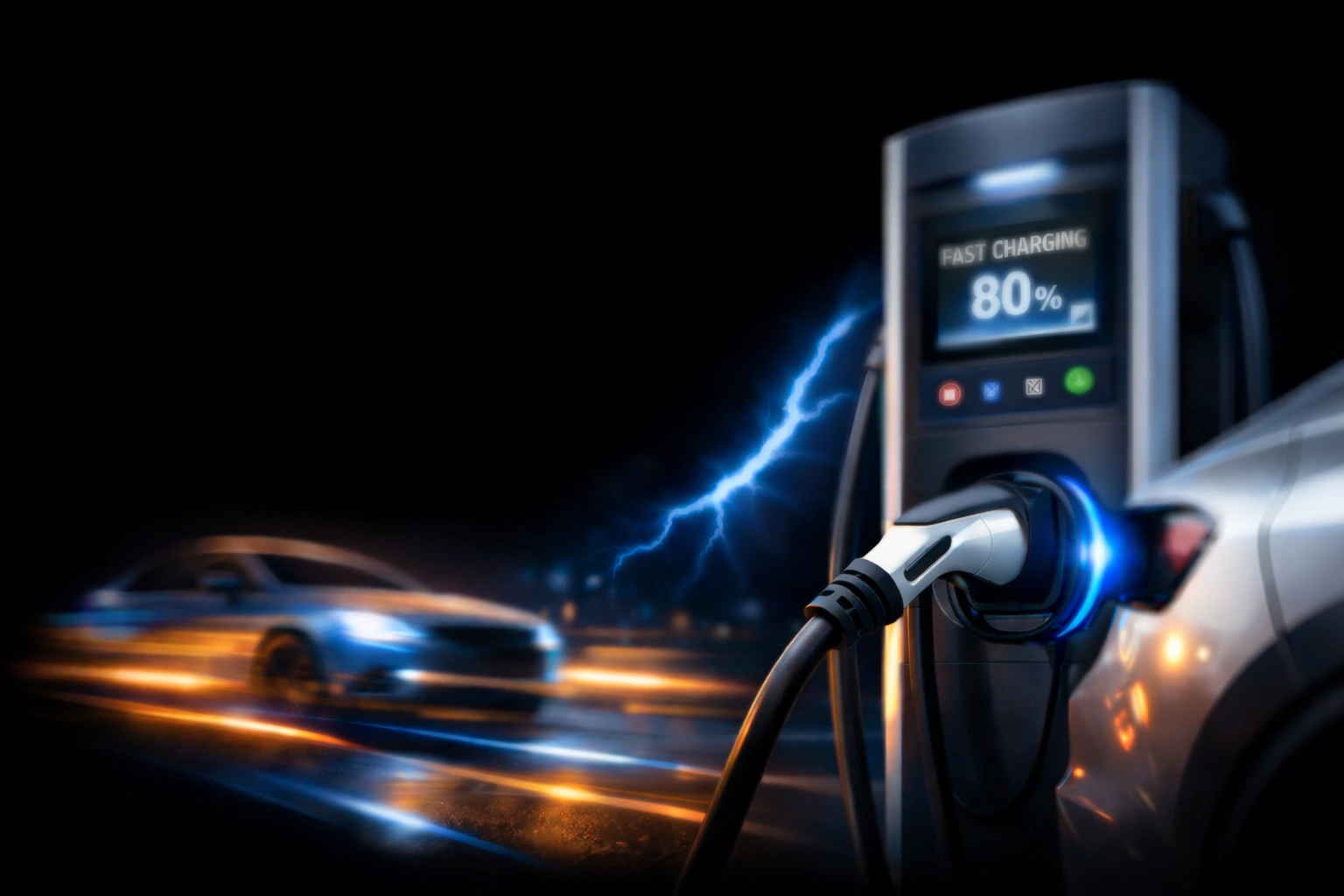
And if you’re wondering what is a level 3 charging station? This is the fast one—DC fast chargers can get your battery to around 80% in just 20–30 minutes. You’ll find these in highways, service stations, and big shopping areas.
How Does a Level 3 Charging Station Work?
Direct Current (DC) Power Delivery
Your EV battery only takes DC power. Level 1 and 2 chargers send AC, so the car has to convert it first, which slows everything down. Level 3 pumps high-voltage DC right into the battery. No conversion step inside the car = super quick charging.
Power Conversion Inside the Charging Station
The station handles the tough part. It receives high-voltage AC from the grid. It converts this into DC using its own converters. Then it shoots that DC straight through the cable to your car. That’s why these units look so chunky, they’ve got the muscle to do the job so your car stays light and fast. This entire process is a big part of what is a level 3 charging station — turning raw grid power into fast, direct energy for your EV.
Battery Management System Communication
Plug in and boom—the charger and your car start chatting. Your car’s Battery Management System says stuff like “battery’s this warm, this full, can handle this much juice right now.” The charger adjusts instantly.That kind of smart syncing is part of what is level 3 charging station technology at its best.
Cooling Systems and Heat Management
Fast charging = lots of heat in the charger, the cable, and your battery. These stations fight it with fans, liquid cooling, or both. Some even help cool your car’s battery on the spot. Good cooling means you get reliable fast charges without anything getting damaged or throttling back.
How Fast Is a Level 3 Charging Station?
Typical Charging Speeds and Time Estimates
Most Level 3 chargers pump out 100 to 350 kilowatts of power. Plenty of EVs, at a solid 150 kW, can pick up around 180 miles of range in about 30 minutes. The two factors that influence the exact time is the car’s battery size and the amount of juice it’s capable of handling. Cars built for higher power soak it up faster and cut the wait even more.
Factors That Affect Level 3 Charging Speed
A bunch of things decide how quick the charge really goes. Your battery’s size matters, of course, along with how full (or empty) it is when you plug in. Cold weather hits hard and slows everything down. The car itself has to be DC fast-charging capable. Then there’s the charger’s max power and whether the station is busy sharing demand.
Where Are Level 3 Charging Stations Located?
Public DC Fast Charging Networks
A handful of big companies operate vast public networks packed with Level 3 stations—like Tesla’s Superchargers, Electrify America, and EVgo. They’re spreading nationwide, turning long EV journeys into smooth sails. You can spot them easily through apps or your car’s nav, complete with live updates on spots free and costs. These networks make it easy to see “what is a level 3 charging station” in real-world use.
Highways, Commercial Areas, and Retail Locations
Most people ask – but where are level 3 charging stations? Well, you’ll find them lining highways, ready for speedy top-ups on drives. They pop up in bustling business districts, malls, and popular shops too. With the rise of level 3 EV charging for retail properties, it’s all about ease: charge while you eat, browse, or just pause briefly before hitting the pavement again.
Level 3 Charging Station Installation Requirements
Power and Electrical Infrastructure Needs
Level 3 charger feeds on 480 volts of three-phase electricity — far more than your home can handle. That’s why it lives in places with industrial-grade power. Taming it takes special upgrades, EV charging contractors, and a team effort with the local utility crew.
Space, Cooling, and Safety Considerations
These stations need enough space and the proper electrical setup because they handle high voltage power. Cooling systems control heat using fans and liquid. Safety systems monitor the charger and shut it off immediately if there is a problem. The area is designed so cars can park, charge, and leave easily.
What Is the Difference Between Level 2 and Level 3 Charging Stations?
Charging Speed Comparison
Level 2 charging can be defined as one that is slow but steady. Level 3? It delivers power fast and in large amounts. While Level 2 adds 20 to 60 miles per hour, Level 3 can throw in 100 to 200 miles in 30 minutes flat. One’s for overnight. The other’s for overdrive.
Cost, Power Output, and Use Cases
Level 2 chargers: they’re affordable, simple, reliable. Level 3 is extremely efficient, although it can be a bit pricey. It pumps out up to 350 kW, needs serious wiring, and lives where speed matters. And that basically answers — what is the difference between level 3 charging station setups and your typical at-home plug.
Advantages and Benefits of Level 3 Charging Stations
Rapid Charging for Long-Distance Travel
Long drives demand momentum, and Level 3 charging helps maintain it. A short stop can deliver a meaningful boost in range. It lets you get back on the road quickly and stay on schedule. Charging sessions are measured in minutes rather than hours, making it easier to plan routes, manage time, and travel with confidence.
Reduced Range Anxiety for EV Drivers
Battery dropping? Don’t sweat it. Level 3 stations are always ready to rescue you from the dreaded low-battery panic. They’re dotted in all the right spots, bringing peace of mind to every journey.
Ideal for Commercial and Fleet Operations
Fleet vehicles don’t have time to nap. They need juice, fast. Level 3 chargers keep cabs, delivery vans, and work trucks rolling without long pit stops. Less time charging means more time doing. For businesses, that’s not just handy — it’s a game-changer for efficiency, savings, and staying ahead.
Limitations and Concerns of Level 3 Charging
Battery Degradation Concerns
Fast charging is great when you need it, but rough in large doses. Too much Level 3 can heat things up and wear your battery faster over time. The fix? Mix in some slower charges now and then. Balance is key — even your battery needs a breather.
Higher Installation and Charging Costs
Installing Level 3 at home? Better have deep pockets and serious wiring. These beasts cost tens of thousands to set up, and even the charging sessions aren’t cheap. They’re built for public spots, not personal garages. They are built for busy public locations, and for most homes they are simply too expensive and far more powerful than necessary.
Is a Level 3 Charging Station Worth It?
When Level 3 Charging Makes the Most Sense
Driving all day? Managing a busy fleet? Constantly on the move? That’s where Level 3 shines. It is designed for people who are always on the move and need fast, efficient stops so they can keep going without losing time. But if your car naps every night in the garage, you’ll likely be fine with slower, cheaper charging.
Can You Install a Level 3 Charging Station at Home?
Why Level 3 Chargers Are Rare for Residential Use
Plugging a Level 3 charger into your house is possible, but wildly impractical. It needs industrial power most homes don’t have. Add in steep costs and zoning red tape, and it’s clear: these giants belong in public, not your backyard.
How Much Does It Cost to Charge at a Level 3 Charging Station?
Pricing Models: Per kWh vs Time-Based Charging
Some stations charge for energy used (per kWh), others for how long you’re plugged in. Sounds simple, but it matters. If your car charges slower, time-based pricing can sting. Energy-based is usually fairer. Before you plug in, take a peek — it might save you money.
How Long Does It Take to Charge an Electric Car at a Public Charging Station?
Charging time depends on your car’s battery and the charger’s muscle. Level 2 is a 4 to 10-hour affair. Level 3? It’s very quick — 20 to 40 minutes for 80%.
Level 3 Charging Compatibility and Standards
CCS, CHAdeMO, and NACS Explained
CCS is the most common option in many regions. CHAdeMO is older and still supported by some vehicles, though it is less widespread today. NACS, originally developed by Tesla, is now being adopted by more automakers and charging networks.
Your vehicle must be compatible with the connector type at the charging station. If the connector at the station does not fit your car’s charging port, charging will not start. Before you pull in, check your vehicle’s port type.
Future Trends in Level 3 Charging Stations
Ultra-Fast Charging and Higher Power Outputs
The future is fast — lightning fast. New chargers are breaking limits, aiming for 100 miles in 10 minutes or less. Perfect for big batteries, trucks, and impatient drivers. These powerhouses will turn EV charging into a blink-and-go experience. It’s advances like this that truly highlight what level 3 charging station technology is evolving into.
Plug-and-Charge and Smart Grid Integration
You plug in the car, and charging starts automatically. Payment and approval happen right away, with no extra steps. It seems simple, but the system is working in the background. Smart grid systems track power use, send electricity where it is needed, and keep everything running smoothly.
Frequently Asked Questions About Level 3 Charging Stations
What's the difference between a level 2 and level 3 charger?
Level 2 is your everyday slow-but-steady charger, using AC power and taking several hours to top off your battery. Level 3 feeds your car DC power directly, zooming up to 80% in under 40 minutes. One’s a cozy home charger. The other’s built for the fast lane — and perfectly sums up what is a level 3 charging station.
Is a level 3 charger worth it?
If you’re constantly driving, on road trips, or running a fleet that can’t sit still — yes, it’s absolutely worth it. Level 3 saves time, reduces downtime, and keeps you moving. But for daily home use, it is usually far more power and expense than most drivers actually need.
How much does it cost to charge at a level 3 charging station?
Fast power doesn’t come cheap. Charging at a Level 3 station usually runs $0.25 to $0.60 per kilowatt-hour. That’s $15 to $30 for a full charge. And if the station bills by time? Slower-charging cars may end up paying more. A quick top-up can be quick… and pricey.
Can you install level 3 charging at home?
In theory? Yes. In real life? No. Level 3 needs power levels usually reserved for factories, not family homes. Between the giant costs and electrical rewiring, it’s a heavy lift. It’s smart and cheap to stick with Level 1 or Level 2.
Do level 3 chargers damage batteries?
Fast charging brings heat, and heat wears batteries down over time. So yes, constant use might age your battery a bit faster. But occasional use? Totally fine. EVs have smart systems that keep charging safe. Sometimes, your battery likes a slower pace too.
How long does it take to charge an electric car at a public charging station?
Level 2 chargers are the slow and steady types — they’ll need 4 to 10 hours. Level 3 chargers blast your battery up to 80% in 20 to 40 minutes. The car, charger, and current level: all play a role.